Thursday, July 21, 2011

Oh, Udolfo...

Northanger AbbeyNorthanger Abbey by Jane Austen

My rating: 5 of 5 stars


My one complaint about this book would have to be its length: there's not nearly enough of it. But, I'd often wondered exactly what a book written from Jane Bennet's perspective would be like, and now I think I have have a fairly decent idea.


Catherine is a sweet, naive girl who tends to believe too much in the innate goodness of all people that she loves, and too much in the necessity of the villains of her Gothic novels. But she is only seventeen, after all, though she turns eighteen somewhere in the book.


This read almost like Austen was simply idly amusing herself in the writing of it. I was two chapters from the end and wondering how she was going to tie it all together when out of the blue the omniscient narrator suddenly begins a conversation with the reader.


Most of the book was lighter and more flippant than her others, but of all her heroes, I have to say I've now put Henry Tilney right toward the top of the list, and of her heroines, I kind of like Catherine. She's a bit of a ditz, but such a sweet, dewy eyed ditz that you can't help but feel a bit protective of her, like you want to cloister her away from the big bad world so she can remain a naive seventeen year old forever.


Anyway, great fun, and more overtly fun than any of her others to date.

Also, it's just delightful to have an Austen heroine reading a Bronte novel, and thus to get a rather hilarious book review by Austen herself...


View all my reviews

Monday, July 18, 2011

Wildebeest and Eagle

When this baby wildebeest becomes a grandfather, he's going to be the most annoying grandfather in the world, always going on about the time that he got attacked by lions and crocodiles at the same time. But I think he's earned it.

http://www.youtube.com/watch?v=LU8DDYz68kM


And then of course, my favorite bird on earth, just because of what it can do: the Golden Eagle.


First, it can kill a goat:

http://www.youtube.com/watch?v=XafAdkZIYKA


But the way it brings down a deer is simply unreal:

http://www.youtube.com/watch?v=xAsXtDKdU0Q&feature=related


Enjoy.

Friday, July 15, 2011

Pretty Much Sums it Up.

http://www.tobyjsumpter.com/a-cautionary-tale/?utm_source=twitterfeed&utm_medium=twitter&utm_campaign=Feed%3A+HavingTwoLegs+%28Having+Two+Legs%29

Rachel Jankovic via Piper

Rachel Jankovic is Doug Wilson's youngest daughter, and she wrote a magnificent piece on motherhood that is posted on Piper's website.

Enjoy.


Motherhood Is a Calling (And Where Your Children Rank)
July 14, 2011 | by: Rachel Jankovic | Category: Commentary
Subscribe to...


A few years ago, when I just had four children and when the oldest was still three, I loaded them all up to go on a walk. After the final sippy cup had found a place and we were ready to go, my two-year-old turned to me and said, “Wow! You have your hands full!”

She could have just as well said, “Don’t you know what causes that?” or “Are they all yours?!”

Everywhere you go, people want to talk about your children. Why you shouldn’t have had them, how you could have prevented them, and why they would never do what you have done. They want to make sure you know that you won’t be smiling anymore when they are teenagers. All this at the grocery store, in line, while your children listen.

A Rock-Bottom Job?

The truth is that years ago, before this generation of mothers was even born, our society decided where children rank in the list of important things. When abortion was legalized, we wrote it into law.

Children rank way below college. Below world travel for sure. Below the ability to go out at night at your leisure. Below honing your body at the gym. Below any job you may have or hope to get. In fact, children rate below your desire to sit around and pick your toes, if that is what you want to do. Below everything. Children are the last thing you should ever spend your time doing.

If you grew up in this culture, it is very hard to get a biblical perspective on motherhood, to think like a free Christian woman about your life, your children. How much have we listened to partial truths and half lies? Do we believe that we want children because there is some biological urge, or the phantom “baby itch”? Are we really in this because of cute little clothes and photo opportunities? Is motherhood a rock-bottom job for those who can’t do more, or those who are satisfied with drudgery? If so, what were we thinking?

It's Not a Hobby

Motherhood is not a hobby, it is a calling. You do not collect children because you find them cuter than stamps. It is not something to do if you can squeeze the time in. It is what God gave you time for.

Christian mothers carry their children in hostile territory. When you are in public with them, you are standing with, and defending, the objects of cultural dislike. You are publicly testifying that you value what God values, and that you refuse to value what the world values. You stand with the defenseless and in front of the needy. You represent everything that our culture hates, because you represent laying down your life for another—and laying down your life for another represents the gospel.

Our culture is simply afraid of death. Laying down your own life, in any way, is terrifying. Strangely, it is that fear that drives the abortion industry: fear that your dreams will die, that your future will die, that your freedom will die—and trying to escape that death by running into the arms of death.

Run to the Cross

But a Christian should have a different paradigm. We should run to to the cross. To death. So lay down your hopes. Lay down your future. Lay down your petty annoyances. Lay down your desire to be recognized. Lay down your fussiness at your children. Lay down your perfectly clean house. Lay down your grievances about the life you are living. Lay down the imaginary life you could have had by yourself. Let it go.

Death to yourself is not the end of the story. We, of all people, ought to know what follows death. The Christian life is resurrection life, life that cannot be contained by death, the kind of life that is only possible when you have been to the cross and back.

The Bible is clear about the value of children. Jesus loved them, and we are commanded to love them, to bring them up in the nurture of the Lord. We are to imitate God and take pleasure in our children.

The Question Is How

The question here is not whether you are representing the gospel, it is how you are representing it. Have you given your life to your children resentfully? Do you tally every thing you do for them like a loan shark tallies debts? Or do you give them life the way God gave it to us—freely?

It isn’t enough to pretend. You might fool a few people. That person in line at the store might believe you when you plaster on a fake smile, but your children won’t. They know exactly where they stand with you. They know the things that you rate above them. They know everything you resent and hold against them. They know that you faked a cheerful answer to that lady, only to whisper threats or bark at them in the car.

Children know the difference between a mother who is saving face to a stranger and a mother who defends their life and their worth with her smile, her love, and her absolute loyalty.

Hands Full of Good Things

When my little girl told me, “Your hands are full!” I was so thankful that she already knew what my answer would be. It was the same one that I always gave: “Yes they are—full of good things!”

Live the gospel in the things that no one sees. Sacrifice for your children in places that only they will know about. Put their value ahead of yours. Grow them up in the clean air of gospel living. Your testimony to the gospel in the little details of your life is more valuable to them than you can imagine. If you tell them the gospel, but live to yourself, they will never believe it. Give your life for theirs every day, joyfully. Lay down pettiness. Lay down fussiness. Lay down resentment about the dishes, about the laundry, about how no one knows how hard you work.

Stop clinging to yourself and cling to the cross. There is more joy and more life and more laughter on the other side of death than you can possibly carry alone.

Rachel Jankovic is a wife, homemaker, and mother. She is the author of "Loving the Little Years" and blogs at Femina. Her husband is Luke, and they have five children: Evangeline (5), Daphne (4), Chloe (2), Titus (2), and Blaire (5 months).

Friday, July 8, 2011

Bell and Sampson

Here is a movie made by Rob Bell (thank you Anonymous), and here is a spoof done by Canon Press (starring Stephen Sampson). Then, Wilson responds to all the questions you're about to ask here.

Blessings,
Jesse Broussard

Judge the Judges

so that by the Judges we shall be judged.

My house (Boniface Hill) will be starting a Bible study on the book of Judges soon, and not just by Aslan's definition. As a result of this, I'll have regular posting fodder, which I'll probably write, revise, re-revise, read, question God's wisdom in perpetuating my existence, and use the posting fodder to "put Watts in 'em, boys" or some such not-necessarily-productive-but-definitely-entertaining thing (large bangs and primary colors appeal to the young). But, one post in a hundred will probably make it past the gauntlet of semi-sentience that is my mind, and this is the first of those, in my typical sophisticated and highly technical writing style of "somewhat like a list or something."

1. Judah is the royal tribe of Israel (read the blessing in Genesis something or other), so it's not surprising that they're sent in first. What is surprising is that they ask Simeon, one of the two tribes cursed for using the sign of the covenant (circumcision) as a weapon against members of the covenant (the freshly circumcised). The result of this curse was that they didn't have a parcel of land for their own; theirs was taken out of Judah's.

2. Adoni-Bezek: literally, 'Lord of the Lighning flash' or 'Lord of the Sunrise.' In either case, this Adoni is not too hard to see as a representation of Satan, the ruler of the world: he is a Jovian figure (lightning or sunrise) who dominated the seventy nations. (In Genesis nine or ten, the seventy nations of the world are listed; when seventy nations are mentioned here it's an obvious reference to the world. Therefore, Adoni-Bezek is the "ruler of the world.") It's significant that he's the first to fall. The rest of the book is the mop-up job that we botch (much as today, the war is over, but we keep losing battles), but our sin is used to demonstrate the fact that it can't stop the Grace of God, and we'll end up winning in spite of our best efforts. So quit whining, barbeque the tri-tip, raise your glass to God and sing something, blessit (inverted profanity).

3. Big toes and thumbs: not a clue, except for the obvious military ramifications (ever thrown a spear without a thumb? I thought not). Somehow it's more significant than just this, but I don't really know how; it's like the places of the body that the blood is rubbed on. So if you know, tell me, and if it's convincing, I'll add you as an admin to my blog and try to get in on your book royalties.

4. Ten-thousand: obviously a round number, but surprising in that it's four tens instead of just three.

5. Kirjath-Arba: Kiriath means city, and Arba means four, so this is plausibly four cities that merged. However, far more interesting is that Arba was the name of the father of Anak, and therefore of the Anakim (the giants with a fondness for digital sextets that terrified the Israelites so that their bodies were scattered in the desert), so this is also plausibly a city founded by him. In any case, it's occupied by giants, and Judah kills them all; one of the reasons there are so few left today.

6. Note the five kings of the Philistines, and endure typology: the fifth day of creation is when the fishies and the cheep-cheeps were made, and the fish typically represent the gentiles (hence, we're fishers of men, and in the OT fish are almost never mentioned and are absolutely never eaten, and then Jesus comes and suddenly we didn't know that other animals were made out of food). So, the five rulers of the Philistines represent the Gentile world as a whole, and anytime you see five kings, you're fully justified in thinking "uh-oh." This becomes big with Sampson, and is huge in Revelation and anything else that John wrote.

7. And finally, they start out so gloriously... Here's the pattern:

1. Creation
2. Fall
3. Decline
4. Judgment
5. Re-creation

The chief three?

1. Adam to Noah,
2. Noah to David and Ezra,
3. Daniel and Ezra to Christ and the Church.


That's all for now.

Blessings,
Jesse Broussard

Thursday, May 26, 2011

The Emperor Exhumed

Defending ConstantineDefending Constantine by Peter J. Leithart

My rating: 5 of 5 stars


Wow. This is the first time I've decided to intentionally wait over two months before reviewing a book.

To get all the boring yet essential stuff out of the way: Leithart is brilliant. This is not really news to any of my classmates; it's like saying "Obama is president." Yeah. We know that. But to those of you who haven't had the privilege of taking Theology from the guy who was being published in theological journals before I was born and would still manage to smoke me in basketball, allow me to inform you: Leithart is brilliant. Secondly, he's not lazy, and not only has he written about as many books as I've read, but he reads a few thousand per week and never forgets a word of them. This is the only explanation. I think he's a vampire. Or at least the Count of Monte Cristo.

I distinctly remember one all-night study group that I had in which we, foolish delinquents that we were, walked past Leithart's office to go get coffee at midnight. He was sitting there instructing his computer on the finer points of supra vs. infralapsarianism and its effects upon the reconciliation of the soteriological and ecclesiological disparities in Augustin's De Trinitate and City of God (or playing minesweeper; it's really hard to say), and, when our study group finally realized that we had no hope of remembering which route was taken by Darius and which by Xerxes and had settled for the somewhat less productive task of drawing a fleet of planes bombing the very accurately detailed (hail Everardus) British Isles, we decided to go for a walk to clear our heads. This was about two am, and Leithart was still in his office, either in the running for the theological equivalent of the nobel prize or setting a new record time for the "experienced" category. When we walked by his office again at four, he was still there, without appearing to have moved, but wearing a different shirt and tie: he had gone home, slept, showered and come back in to school between two and four am. He then led morning prayer at six-thirty, which was when I decided to give up on life and start taking my computer games more seriously.

Anyway, this book is by Leithart, which is a very good thing. However, even his tremendous ethos (think reputation) may not manage to drive so much as the title through the emotional antagonism that the vast majority of the church has toward Constantine. I had no such hesitation, as, on the one hand, I don't believe that Shakespeare is Shakespeare, or that AIDS is caused by an STD, or that our last president was stupid, or (no stoning me allowed) that our current one is evil, and on the other hand, I could easily believe that Leithart and Constantine were good friends back in the day, when Leithart was young and foolish, so I was eager to believe the best of Constantine. Plus he has an awesome name. However, I and my kiddie-pool enthusiasm weren't quite prepared for the tsunami of Leithart's nearly exhaustive knowledge of the subject. In some ways, this book reminded me of his Brazos commentary on 1 & 2 Kings, in which half of the book is spent interacting with other authors of differing opinions. There is no shortage of authors antagonistic toward Constantine, charging him with everything from brilliant and cynical statesmanship to being a rather dense tool of the devil to having extremely poor penmanship, and Leithart has to spend almost the entire book exhuming him so as to exonerate him before he got to the dessert: the last chapter: the baptism of the world.

I'll not even attempt to summarize in a book review what took a man such as Leithart an entire book to lay a foundation for, and forty pages to expound. Allow me to simply say this: I'm not actually as twitterpated about Leithart as I make myself out to be. I believe him to be tremendously brilliant, but there are actually several points upon which, I flatter myself, I disagree with him. Probably I don't even understand the issues that I disagree about, and lack the intelligence to comprehend, let alone defend my position, but so be it; I can only do what I can with what I was given, though I'm usually too busy eating kettle chips and reading Dilbert to do even that, so I operate on a different plane than men such as Leithart. However, this book was a sledgehammer. Had I loathed Leithart's very existence (which is impossible to do once you've met Smith, or at least heard him play piano), I still would have been thoroughly shaken. Had I ignored every argument that he made to lay the foundation for his final argument, I still would have been stunned by the breadth and the implications of it.

All of this to say that Leithart's Defending Constantine had a greater impact upon me than any other book I've read this year, and opened an entirely new way for me to view the world. It is a tremendous book, and very well worth the read.


View all my reviews

Wednesday, May 25, 2011

Getting Full

Mockingjay (The Hunger Games, #3)Mockingjay by Suzanne Collins

My rating: 4 of 5 stars


Angry Jesse. Cannot anyone write a decent ending anymore? Of course she married (I'm rebelliously inferring marriage) the twit while the other guy runs off somewhere. Of course district 13 exists, but is a Brave New World in the style of Pink Floyd mixed with Huxley (did you ever wonder why we had to run for cover when the promise of a brave new world unfurled beneath the clear blue sky?). But Prim? That was downright evil. The entire purpose of the first book has been negated. Everything goes from grey to black to black with a glimmer of grey, and I'm getting tired of waiting for sunrises.

Yet, these were well written and very enjoyable, and a movie version would of necessity be happier. So, still four stars, still not kids books in any way save the writing style, and I still think they were worth reading.


View all my reviews

Still Hungry

Catching Fire (The Hunger Games, #2)Catching Fire by Suzanne Collins

My rating: 4 of 5 stars


Well. Of course she won the games, and managed to set a first ever record of having two winners, so the evil president hates her and wants her dead and all of that, causing her to fake a relationship that will turn into a real relationship (with the wrong guy), and a rebellion will start and I now know how the rest of the series will go but still am somehow in suspense.

More cautions keep coming the longer I keep reading: there is a sexual overtone to the books that is disquieting. The girl is seventeen and keeps being interested in first the one guy, then the other, but never is anything remotely akin to marriage even referenced, which is aggravating. Also, the violence is downright disturbing. So, again, not kids books.


View all my reviews

Friday, May 20, 2011

Kicking the Pansy Vampires Diamond Tushes

The Hunger Games (The Hunger Games, #1)The Hunger Games by Suzanne Collins

My rating: 4 of 5 stars


Well, first things first: The Hunger Games by Suzanne Collins is infinitely superior to anything in the Twilight series: I blazed through Meyers due to the quality of the writing (if I spent more than fifteen or twenty seconds per page I began to feel an overwhelming urge to find the nearest Mormon and incontrovertibly demonstrate to him the falsity of his personal views on eschatology in a way that would have made the baby Jesus cry). I'm going through Collins at the same pace for the same reason, but on the other end of the spectrum: the woman can write. She uses humour. And the humour is funny. There is suspense, and it's downright suspenseful. It's a book written for children, by a modern author, and I would honestly choose reading this book over asking a father who loathes the very essence of my being for permission to court his only daughter. In fact, though intended for an older audience, these were on par with the best of the Harry Potter books.

That said, these are "children's books" in the same way that Saw V: 3D is a romantic comedy.

The basic premise is--and here I should give some sort of spoiler alert, but I have no intention of doing so as I probably detest you for having the gall to breathe and can't be bothered to waste words that could be spent belittling your meager existence--but the basic premise is as follows: in a dystopian future, the North American Continent has been divvied up into thirteen "Districts" ruled by a "Capitol." Due to a failed rebellion some three quarters of a century before, the Capitol exacts a tribute in children from each of the twelve surviving Districts (District Thirteen is believed to have been nuked off the face of the planet, but I don't think I believe her), one boy and one girl from each district for a total of twenty-four children, who have to compete in an extended, televised, gladitorial death-match. The battle can go on for weeks, and the one child to survive wins. Our story takes place in District Twelve, where the sixteen-year old Katniss Everdeen volunteers for the "Hunger Games" in place of her twelve-year old sister, Prim, who had been selected. Other characters of interest are her alcoholic mentor, her mother, the boy going to fight with her, and her friend and hunting partner that she should end up marrying but probably won't.

The book, as I said, is very well written. It is a thriller, and I kept forgetting to breathe throughout the book (even though I knew she'd survive, or the next two in the trilogy would be very boring). I was surprised at the method of her survival, and the ending of the first book might as well have been ended the way Thucydides ends for all the closure it gives us. An easy four stars, an easy R rating whenever it's converted into film.


View all my reviews

Tuesday, May 10, 2011

Alice Must Be Bored

Alice in WonderlandAlice in Wonderland by Lewis Carroll

My rating: 2 of 5 stars


An honest caution: I may be prejudiced due to the fact that Carroll was a suspected pedophile who had, at best, one seriously creepy relationship with the ten-year-old Alice. That said, here's my review.


Well, I finally did it. Mostly. Kinda. Not really, but enough to satisfy myself, and then another hour, at which point I decided that an acid trip from the point of view of a six year old really wasn't all that interesting. I was reminded of Chicken Run: "Me life flashed before me eyes... It was really boring." So, I went from Lewis Carroll to G. K. C. Ballad of the White Horse, to be precise, and I have to say that that there was a bit of a contrast.


Now here's a spoiler alert: I'm about to give away the entire plot of the book (or at least the first half). Alice is normal, then really short, then really tall, then really short, then gets a really long neck, then gets short, then gets normal, then gets huge, then gets normal, then gets tiny, and keeps talking to random animals and animated inanimate objects throughout, the most interesting characters being the Cheshire Cat and the decapitatomatic queen, and a couple bits of poetry are randomly scattered throughout. But even with the poetry: "Speak roughly to your little child, and beat him when he sneezes..." is kinda weak when placed right before "But while he moved like a massacre, he murmured as in sleep," and not just due to content: due to sheer aesthetic appeal.


Now, it is a kid's book, and maybe I would have enjoyed it when I was about six, but I think my attention span was even shorter then (if possible) than it is now, so I'm gonna go with a negative. It's the kind of book that's excellent for bedtime reading when you have several kids who fall to sleep at different times, cause you just keep reading till the last one's asleep, and the next night, when the others ask what they missed, you can honestly say "absolutely nothing" and just pick up where you left off with no one the wiser. Perhaps I'm being overly negative. I don't know: lot's of people seem to like it, but then, lots of people like the movie renditions of Chronicles of Narnia and Lord of the Rings; you know, the ones with High King Peter the Twit? Faramir the Insecure? Reepicheep the Gerbil on Crack? Orcs with the combat skills of unusually dense alfalfa?


But I digress. The point is, I don't know how this ended up being a classic. It's Modern, as in Original (all rise), but just because no one else was stupid enough to do something doesn't necessarily make you smart for being the first one. Yes, Picasso could draw like Rembrandt, but most of the time he didn't. Most of the time he drew like he had a bad case of Tourette's, and you can tell me it's brilliant all you want, I'll take a Durer or Vermeer or even Bosch (which is definitely original, but in a really different kind of way) anytime. Unless the Picasso or Kandinsky is worth more, in which case I'd sell it and buy kettle chips, pipe tobacco and beer, just to dispel the gnawing suspicion that I have artistic taste that goes beyond "pretty" verse "projectile vomit into an electric fan." I don't see what's so great about the new and novel, especially when it really sucks.


So, if Lewis Carroll is your idea of pleasure reading, have fun. I know tastes do differ, and as he is so vastly popular, mine appear very much in the minority. Maybe he took the British "nothing is allowed to happen for the first fifty pages" and decided that two hundred was more like it, and I quit just before it got good. Maybe. I'd honestly be willing to reconsider my opinion, and I'm going to give his Through the Looking-Glass a shot before I fully write him off. But it's going to be a from the hip shot that will be in grave danger of hitting my foot while I reach for a soothing draught of Chesterton.


View all my reviews

Wednesday, April 27, 2011

From Wilson

A man walked into a bar with a dog, and told the men at the bar that he was willing to bet them a round of drinks that his dog was actually a talking dog.

"You're on," one of the men said.

The man turned to his dog and said, "What is on the top of a house?"

"Roof!" the dog said.

"What is sandpaper like?" That was the second question.

"Ruff!"

"And who was the greatest ball player who ever lived?"

"Ruth!"

And with that, the assembled men looked at each other, one of them grabbed this gentleman where the pants hang loose, and two others took him by each arm, and they frogmarched him to the door. Another one got the dog, and the man and his dog soon found themselves lying at the base of a parking meter. The man looked at the dog with disgust, and the dog looked back at him.

"DiMaggio?" he said.

Thursday, April 14, 2011

Eugenics

Eugenics and Other Evils : An Argument Against the Scientifically Organized StateEugenics and Other Evils : An Argument Against the Scientifically Organized State by G.K. Chesterton
My rating: 5 of 5 stars

I write down commonplaces as I read books: little items worthy, as N. D. Wilson said, of imitation and remembrance. I have several of these empty, unlined notebooks filled, and have broken tradition with Chesterton in not actually keeping track. With Tolkien, I devoted an entire commonplace book. With Chesterton, I'm not even going to bother trying. His complete works are contained in 37 (or more) large volumes put out by Ignatius Press, and I will just have to allow that to be my Chesterton commonplace book, though I will continue adding in some of his best.

This book, Eugenics and Other Evils, is about what it says it's about, which is odd enough, as Chesterton stays remarkably and uncharacteristically on topic. I think having a target to dismantle has something to do with it, but not really a whole lot, as he proves the impossibility of Eugenics in a single sentence somewhere towards the middle of the book. The other possibility is that his topic is a large enough cage for his mind to momentarily content itself within its confines, which seems more realistic.

Chesterton is always sheer delight to read, always fun, always unbelievably brilliant and flippant and enormous, but I had rarely encountered him with an axe in his hand, and he proves Lewis right: for the child with an axe, the joy is in chopping. This book has a great deal of writing against government interference in the private sphere, and is written defending the old ways, the noble and chivalrous ways over and against the new ways, the stainless steel and minds too close to Saruman's in their obsession with wheels and machines. The eugenist desires to improve the overall quality of life in the same way that Nietschze did, simply a bit earlier. Instead of letting the diseased and weak die, the eugenist just ensures that they aren't ever born by preventing those genetically prone to weakness and disease from breeding, which was a staggeringly popular idea.

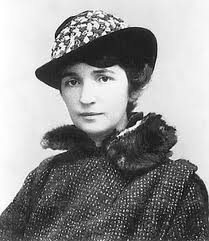
Indeed, it was the single driving influence in the life of the one person whose effect in our century alone has outweighed Stalin, Lenin, Hitler, Pol Pot and every other dictator we've seen. This person has caused more deaths than all of our enlightened genocides and all of the the Medieaval plagues. Combined. Eugenics was the inspiration of that madonna of death, Margaret Sanger. And we think eugenics is a bad joke. In reality, it was a very good joke, an evil joke, but skillful, and we are the punchline, though it turned out to be more indiscriminate than was originally intended.

Perhaps I've read too much Chesterton: I'm acquiring his habits without the skill. Or perhaps I've been up too long. A book review has turned into a tirade against Planned Parenthood. Blame it on whatever you like; I'll rectify it here: the book was magnificent, and I'm going to bed.


View all my reviews

Saturday, April 9, 2011

Blonde Bond = Best Bond

Casino RoyaleCasino Royale by Ian Fleming

My rating: 3 of 5 stars


Well. I was very hesitant to read this one until I read a few reviews of it, just because of Bond's reputation with the womenfolk. However, there was very little of this, and it was (fairly) tastefully dealt with. There was also some language, and of course the violence inherent in such a story.

Suffice to say, I was astonished at how similar the new Casino Royale movie (Daniel Craig, Eva Green) stuck to the book. The primary differences are that M is a man in the book, a few significant plot points are altered, and the movie fleshes out the characters as best it can without the assistance of the omniscient narrator. And, truth be told, I preferred the movie to the book, and it was primarily due to the revision of the lead female. I thoroughly enjoyed Eva Green's more forward, prickly, quick-witted and intriguing character. I liked the verbal sparring: "How was the lamb?" "Skewered. One sympathizes;" I liked the tragic ending in the movie far more than the suicide in the book, and I liked Bond's more human reaction in the movie to the instant dehumanization that takes place in the book.

The basic plot: a Russian operative loses a great deal of money that was merely lent to him by his government, and attempts to recover it by gambling before the assassins from his government catch up to him. The British have discovered his predicament, and stake an agent of their own to play against him and prevent him from winning, thus forcing him to the absolute end of his means, hoping to either turn him or destroy him. Their plan succeeds through the skills of the British agent, who of course is James Bond. Part of Bond's cover includes the lovely woman that his government provides for him, with whom he falls in love, only to discover (after preparing to turn his back on the entire MI-5 life) that she had become a traitor to save an old boyfriend, but ended up loving Bond and sacrificing herself for his sake as a result. He reacts somewhat poorly, and hence Bond, James Bond is born.


View all my reviews

Friday, April 1, 2011

Guthrum Sits on a Hero's Throne, and Asks if He is Dead

The Man Who Knew Too MuchThe Man Who Knew Too Much by G.K. Chesterton

My rating: 5 of 5 stars


I rated this book as world-class, and allow me to qualify: it is probably only world-class to me. After all, the hero dies in the end. Oops. But he's depressed, which makes me love him. He takes a semi-pessimistic view of the world, a la Eliza Bennett's "The more I know of the world the more I am dissatisfied with it" (or whatever she says to Jane that's similar to that). And he complains that his wisdom is only of all the wrong things, so I cannot help but love him. His personality, of all of Chesterton's characters (excluding villains), is most akin to mine, or at least I think it is. Perhaps Brooke or Becky know better (and yes, I know it's misspelled, it's that way on purpose).


It's another selection of short stories that I would recommend to anyone. Not quite so flippant as Father Brown, nor so absurd as Queer Trades, but still vintage Chesterton, from a rare and dusty barrel.


View all my reviews

Hark Twain Once

A Connecticut Yankee in King Arthur's CourtA Connecticut Yankee in King Arthur's Court by Mark Twain

My rating: 2 of 5 stars


Well. Going from Chesterton to Twain? Not exactly the smoothest of segues, kinda like skateboarding when you see a pretty girl and (therefore) not the curb.

I forgot how judgmental Mr. Clemens tends to be. I knew I wasn't going to be all that fond of this particular book of his, what with me being all romantic-ish and whatnot, but I thought it would be enjoyable, not like a poorly presented sermon. And don't get me wrong--it had some hilarious spots, as it is Twain--just not enough to justify it in my mind. I would recommend reading it once, but not twice, and perhaps--dare I say it?--as if you want to say "current" with a clear conscience, but you already know that the quiz doesn't include this particular selection.


View all my reviews

Saturday, March 26, 2011

The Final Chesterton (For a Moment)

Tremendous TriflesTremendous Trifles by G.K. Chesterton

My rating: 5 of 5 stars


This is simply essential reading for any fan of Chesterton. It's vintage. A collection of essays on all sorts of topics: lying in bed, forgetting white chalk, being expelled from a Hansom Cab against his will, Picking his own pockets, robbing a French restauranteur, and all sorts of typical Chesterton absent-minded brilliance. His prose here tends to be more playful than in his fiction, making him the essay writer that is the exception to Lewis' rule in Horse and His Boy.

I still cannot comprehend exactly how he does what he does with words. It isn't forced or strained, as he produced a staggering amount of material, he just sees the world in a wholly different way than anyone else. He knew of his reputation for paradox, but seemed somewhat exasperated by it, as he comments that he isn't the one that made the world stand on its head.

He really is a chap that I would have loved to have met, to have simply followed around, or to have been able to record what his brain did and where his imagination took him in the course of any given hour. As it is, I'm surfacing for air and reminding myself that other authors exist (paltry and pasty beings though they be after the ferocious life and blinding colour of the Fat Catholic), and then I shall dive again when my lungs can sustain me longer. Perhaps one day I shall find--and this is an eternal dream of mine--than not only have I become a good man, but a Chestertonian one: one who knows, loves and lives the absurdities of our Triune God.


View all my reviews

Tuesday, March 22, 2011

The Kitchens of a Lord

Lord KitchenerLord Kitchener by G.K. Chesterton

My rating: 5 of 5 stars


Yet one more time, reviewing Chesterton seems entirely pointless. Still, I shall make an attempt.

This book is, you may have foreseen, about a man named Lord Kitchener. He was a military man that was a contemporary of Chesterton's, and he seems to have practiced war in much the same way that Edward the First of England did upon Llywelyn Ein Llyw Olaf, or Llywelyn ap Gruffydd of Wales if you prefer (sorry Brits, I side with the consonantally enriched): that of superior force and minimal risk, entrenching every victory before moving an inch beyond the ground that was conquered, his army seemingly shoved on from behind by the impetus of his supply train. Slow yet inexorable, Chesterton compares him to a giant snail threatening the lightning Arabs that he was attacking. In his later years, he was involved in the Great War.

More than anything else, this book is fascinating in the fascination that Chesterton had with Lord Kitchener, primarily as a unique individual and secondarily as a sample of the English race as a whole. It is another example of Lewis' maxim that love bestows loveliness: in Chesterton's exuberant praise and hesitant censure, we find ourselves unable to resist developing a similar affection for the man that otherwise would have been largely or entirely unknown to us.

I have long read Chesterton with a certain awe, the type of awe I feel in Ivanhoe when Christopher Lee's paralyzing voice commands "Pray!" or when listening to Joss Ackland read The Screwtape Letters or when watching Anderson Silva deliver a flying knee, and I have come to the conviction that Chesterton never spent a great deal of time revising what he wrote. Not because it is poor, but quite the opposite: it is of such a uniform magnificence that it seems impossible to me that it is the result of "many hours of labour or nights devoid of ease:" there would be a greater variance in it. No, I think he simply wrote in his great, childish wonder, bemused by the absurdity of the world and in imitation of the Mind from which so great an offense to reason as a hippopotamus could proceed, and then, even as his creation was on to the printer he was on to the next item that happened to catch his enormous eye that viewed the world with the mind at once of a philosopher and a child. After all, "philosophers ask the most important questions, save only children." I feel that he is the type of man that one could never quite catch: even as you would grasp one point, he would have made the next three and then gone on to the next topic.

Whether or not this is true I shan't know for some time yet (at least two months, judging from the size of my bag of oatmeal), but I am quite certain that he didn't spend more than an hour or two on this little book. I tend to read fast, though not as fast as N.T. Wright can write, but I think that most Chesterton enthusiasts would find this book entirely suitable for a single pipe and no more than a finger or two of rum, as in "I don't care where the water runs if it doesn't run into the rum."


View all my reviews

Monday, March 21, 2011

In Defense of Lent

"...Postmillenialism is one theological name to describe the basic gospel proclamation that Jesus wins and everyone might as well come along cheerfully."

Saturday, March 19, 2011

Bifurcum Spirans Mammale


ManaliveManalive by G.K. Chesterton

My rating: 4 of 5 stars


Similar to Thursday, but very excellent. So queer and living a man.


#3). I have to say, I really am fully convinced that Chesterton was married to a redhead. There's no other reason for all of his heroines to have red hair. I would also like to take this opportunity to laugh at Brooke--if Chesterton married a redhead, then redheads are obviously superior to every other hair colour.


This book is vintage Chesterton: characters that you meet every day with one that no one but he could dream up. The man is a fool, a genius, a man of tremendous size and athleticism, yet of childlike simplicity. Indeed, "childlike" is perhaps the only accurate way to describe him.


I don't really want to give too much away, in case there's anyone out there mentally deranged enough to read me before he reads Chesterton, but it's an extremely worthwhile read. About half of it takes place in an unofficial trial of the main character, Innocent Smith. Just a great book, light, frivolous, full of commonplaces (In short, he undoubtedly had brains; and perhaps it was not his fault if they were the kind of brains that most men desire to analyze with a poker), and very quick. It really is a very fun book, and this is my third (?) time through it.


View all my reviews

Wodehousian Fun